Page 1 of 1
Brake lights don't work when light switch is on???
Posted: Fri Jan 27, 2006 8:27 am
by philb479
Hey everyone,
First off I have searched and have found nothing, second I have a color copy of the wiring diagram for my year car and I placed all the wires according to the diagram in their respective places on the fuse box. Everything seems to work fine but when I turn my lights on the FRIGGIN brake lights don't work. Turn the lights off BINGO the brake lights work. I am at my wits end I have the diagram, the fuse box picture, and the list that tells you what everything is and I still have this problem. Any help or suggestions would be appreciated.
Phil
Posted: Sat Jan 28, 2006 9:11 am
by JohnB351
Sounds like a grounding problem. Start by removing the brake/tail light assemblies, and removing and cleaning the grounding screws and terminals for each side, then reassemble. I'd try that first.
Posted: Sun Jun 24, 2007 10:53 am
by suicidedoordavid
what does the red LED push button on the dash lit up RED mean?
Posted: Fri Jun 29, 2007 3:18 pm
by Air_Cooled_Nut
The T3 didn't come with LED's nor does it have an illuminated push button.

Posted: Sat Jun 30, 2007 10:51 am
by sideshow
Did the type-3 every come with the bay bus'ish brake light warning light? It fit is a “D” shaped hole on the dash and had a wheat shaped bulb.
You could push one of them and it would light up.
Posted: Sat Jun 30, 2007 6:17 pm
by Marc
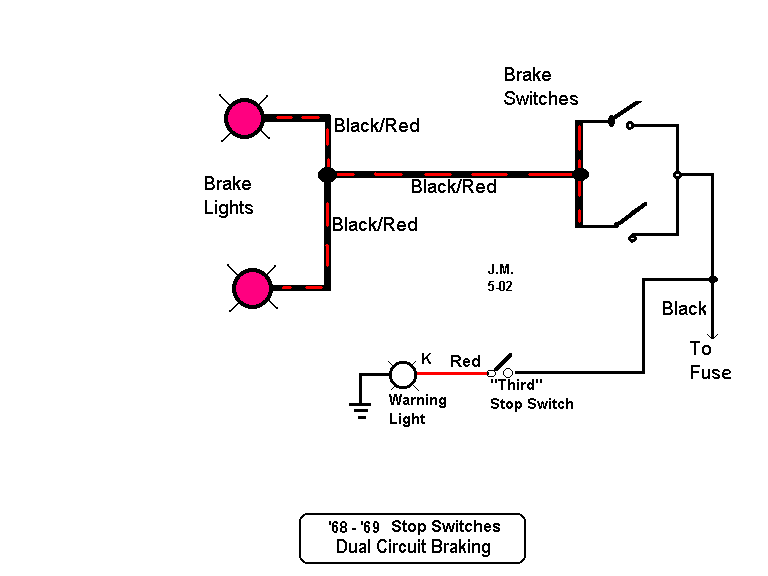
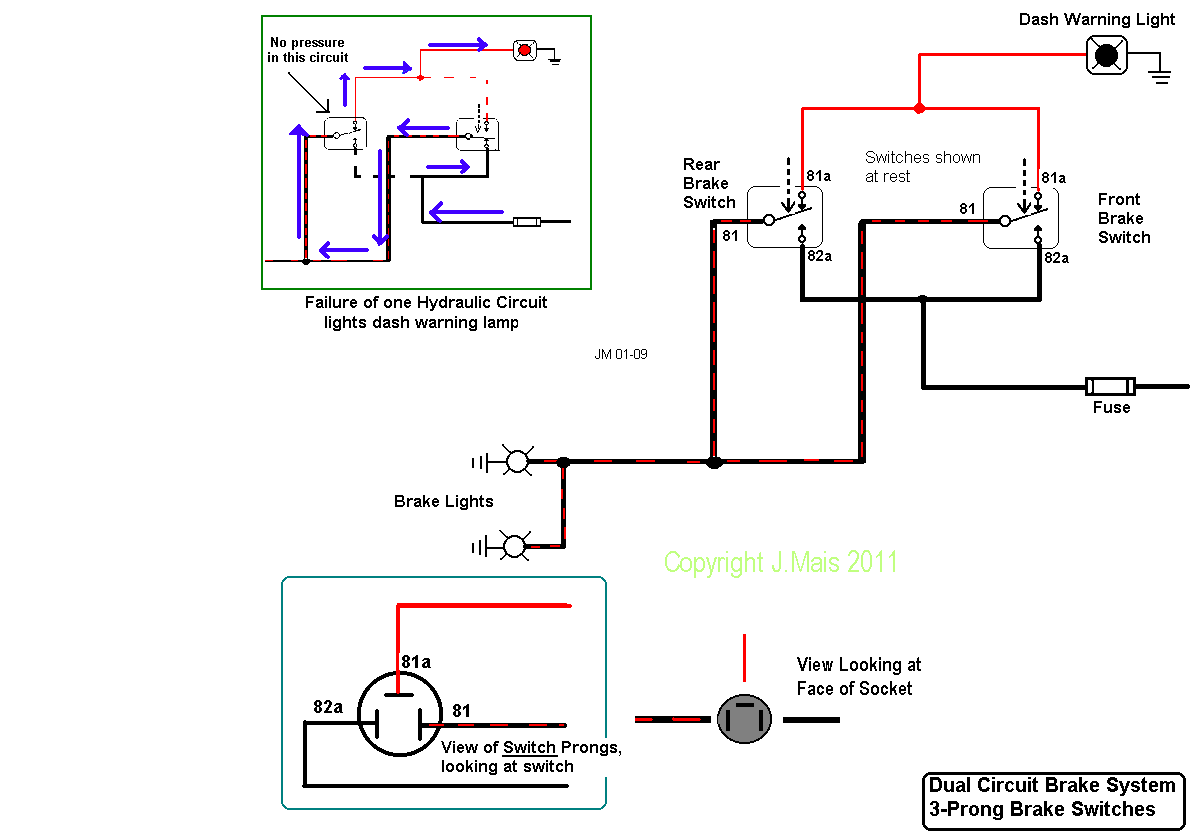
All cars sold in the US from `67-up were required to have dual-circuit brakes (two separate hydraulic circuits, either front and rear or LF/RR and RF/LR). Starting in `68 a requirement was added that there be a warning system to alert the driver if there was a failure of either circuit. Initially VW responded to this requirement by using a master cylinder with an hourglass-shaped "shuttle-piston" in a passage connected between the circuits that would shift and tickle a mechanical switch to light the warning light if either circuit developed substantially more pressure than the other. These master cylinders had three 2-prong switches (two hydraulic, one mechanical) and are obsolete. In 1969 a new setup was introduced that used two 3-prong hydraulic switches instead, cleverly wired so that if one of them actuated and the other did not it would feed power back to light the warning lamp. Through `71, the warning lamp had a "push-to-test" feature - pressing on the lens with the ignition on closed a switch that would make the lamp light. ALL that this tested was that the bulb worked. Starting in `72, the warning lamp was tied in to the generator/alternator so that it would light when the key was switched on, then go out as soon as the charging system started putting out (unless there was a fault). All this did was eliminate the need for the driver to push the button to see if the bulb still works - there's still no real testing of the
system going on.
If the warning lamp is on, it
may be due to an actual imbalance in pressure between the circuits; it also could be due to a wiring fault, or a stuck piston/faulty mechanical switch in the early setup, or a faulty (hydraulic) switch in the late setup.
If the early-style master cylinder has been replaced and the wiring not properly converted for the two 3-prong switches, it could just be that the abandoned wires from the early mechanical switch are touching...
http://www.nls.net/mp/volks/schem/4brake.gif
http://www.nls.net/mp/volks/schem/3brake.gif